
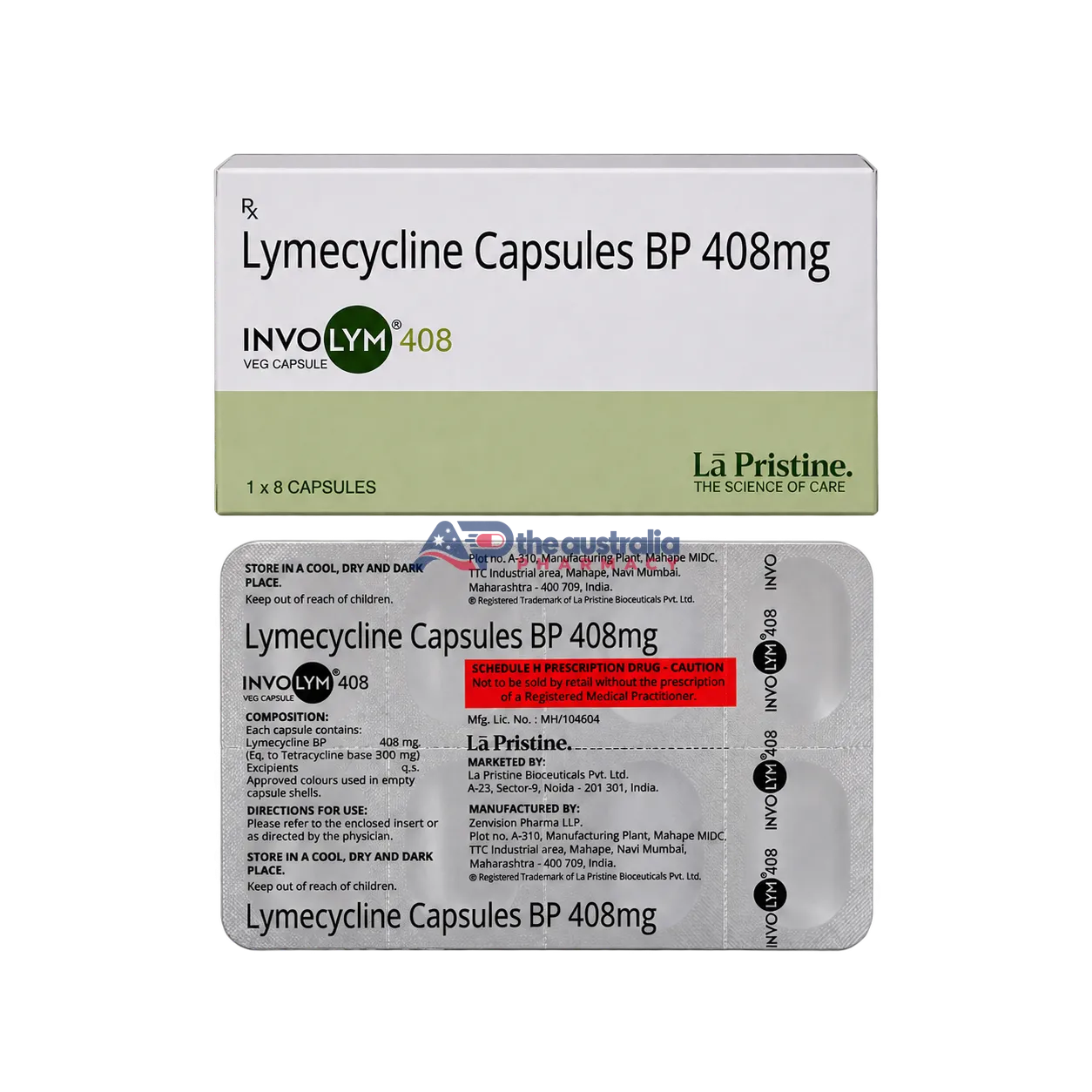
What is lymecycline 408 mg?
Lymecycline 408 mg is an oral tetracycline antibiotic used mainly to treat acne. Doctors may prescribe it when inflamed spots are widespread or haven’t improved enough with other skin treatments.
Each capsule contains 408 mg lymecycline, equivalent to 300 mg tetracycline base. This explains the “300” wording used for some lymecycline products, including Tetralysal 300. A pharmacist should confirm the exact product before changing brands.
Treatment requires a prescription and a medical assessment. The choice depends on your skin condition, other medicines, medical history, and whether a non-antibiotic treatment is more appropriate.
Product information
| Product | Lymecycline 408 mg capsules |
| Active ingredient | Lymecycline |
| Strength equivalence | 408 mg lymecycline, equivalent to 300 mg tetracycline base |
| Dosage form | Hard capsule |
| Route | Oral |
| Medicine class | Tetracycline antibiotic |
| Main use discussed | Inflammatory acne, particularly moderate to severe acne |
| Australian scheduling | Schedule 4 — prescription-only medicine |
| Age considerations | Adults and adolescents when prescribed; not suitable for children under 12 |
| Administration | Swallow whole with a full glass of water; follow the prescription and supplied leaflet |
What is lymecycline 408 mg used for?
Its main use in acne care is controlling inflammatory lesions, such as red bumps and pus-filled spots. A doctor may consider an oral antibiotic for moderate to severe acne affecting the face, chest, or back, particularly when appropriate topical treatment has been insufficient.
Lymecycline can also be prescribed for selected infections caused by susceptible bacteria, depending on the supplied product’s information and clinical guidance. Do not assume it treats every skin infection or use it for an undiagnosed rash. Antibiotics do not treat viral illnesses.
How does lymecycline work?
Lymecycline interferes with bacterial protein production, limiting the growth of susceptible bacteria. In acne, it helps control bacteria associated with inflamed spots and reduces inflammatory activity.
Blocked follicles and oil production also contribute to acne. Your prescriber may therefore combine the antibiotic with a non-antibiotic topical treatment, such as benzoyl peroxide or an appropriate topical retinoid, to address multiple aspects of the condition.
What are the benefits of lymecycline for acne?
The expected benefit is a gradual reduction in inflammatory acne lesions. Treatment can help control active breakouts while you establish a longer-term skin-care plan.
Results vary, and lymecycline does not remove established scars or guarantee permanent clearance. Painful nodules, developing scars, or acne affecting your wellbeing deserve an earlier GP or dermatologist review.
Recommended dosage and administration
How to take the capsules
General acne prescribing guidance commonly uses 1 capsule (408 mg) daily. Your prescriber must confirm your dose and course length. One capsule is not automatically the total daily dose for every condition.
Swallow the capsule whole with a full glass of water. Water helps reduce irritation and ulceration of the oesophagus, the tube carrying food to the stomach. Ask your pharmacist for advice if swallowing capsules is difficult.
You can generally take Lymecycline with or without food. A meal may help reduce nausea. Take it consistently and follow your dispensing label and supplied leaflet.
How long treatment takes
Improvement develops over several weeks. A review is commonly arranged around 8–12 weeks to assess your response, side effects and whether the antibiotic should continue.
Oral antibiotics should have a defined treatment period. Australian acne guidance recommends limiting their duration and using a suitable non-antibiotic topical treatment alongside them. You may continue a maintenance skin treatment after you stop the antibiotic.
Follow the agreed course unless your clinician changes it or a serious reaction requires you to stop. Do not extend or restart treatment using leftover capsules. Healthdirect’s acne treatment guide explains treatment options and when to seek further help.
Missed doses and overdose
Take a forgotten dose when you remember, unless the next dose is nearly due. If it is, skip the missed dose and resume the usual schedule. Never take two doses together to catch up.
For an overdose, contact the Australian Poisons Information Centre on 13 11 26. Call 000 for collapse, seizures, severe breathing difficulty or unconsciousness.
Strengths and substitutes
The 408 mg and 300 mg descriptions used for some lymecycline capsules may indicate the same strength. They are not instructions to adjust the number of capsules.
| Lymecycline 408 mg capsule | Equivalent to 300 mg tetracycline base | Confirm the exact brand and dispensing directions |
| Tetralysal 300 capsule | Contains 408 mg lymecycline, equivalent to 300 mg tetracycline base | A pharmacist must check any proposed substitution |
| Doxycycline | Another prescribed oral tetracycline used for acne | Doses and precautions differ; it is not a capsule-for-capsule replacement |
| Benzoyl peroxide or azelaic acid | Non-antibiotic topical acne treatments | May be used as alternatives or within a combined plan, depending on your acne |
Severe, scarring or treatment-resistant acne may need specialist care. Treatment choices also depend on pregnancy plans, other illnesses and previous side effects.
Lymecycline side effects
- Nausea.
- Abdominal pain.
- Diarrhoea.
- Headache.
Taking the capsule with food may ease nausea. Tell your pharmacist or doctor if an effect persists, becomes severe, or interferes with eating and drinking.
Thrush can occur after antibiotic treatment. Mouth soreness, white patches, or vaginal itching need advice, not assumptions about acne.
Symptoms needing urgent care
Stop taking lymecycline and seek urgent medical help for a severe or persistent headache with blurred or double vision, vomiting, or other visual changes. These may indicate raised pressure inside the skull.
A blistering or peeling rash, mouth sores with fever, yellowing of the eyes or skin, or dark urine also needs urgent assessment. Call 000 for breathing difficulty, swelling of the tongue or throat, collapse or another severe allergic reaction.
Severe, persistent or bloody diarrhoea needs prompt medical assessment, including after treatment. Ask before taking medicine to stop diarrhoea.
Safety advice
Who should avoid lymecycline?
Do not take it if you are allergic to lymecycline, another tetracycline or an ingredient in your capsule. Inactive ingredients vary between products, so check the supplied pack if you have an excipient allergy.
Lymecycline is contraindicated in established renal insufficiency. Discuss any kidney problem before treatment. Liver disease, lupus and myasthenia gravis also require medical review.
Do not use it in children under 12 because tetracyclines can affect developing teeth and bones, including causing permanent tooth discolouration.
Pregnancy, breastfeeding and contraception
Do not take lymecycline during pregnancy. It can affect the developing baby’s teeth and bones. Tell your prescriber if you are planning a pregnancy or become pregnant during treatment.
Product leaflets advise against breastfeeding use. Some clinical guidance allows selected short courses after assessment, but acne treatment usually lasts longer. Do not start a prolonged course while breastfeeding without specialist advice; another treatment may be preferable.
Lymecycline does not directly stop hormonal contraception working. Vomiting or severe diarrhoea may, however, reduce absorption of an oral contraceptive. Follow the leaflet and ask a pharmacist whether you need additional protection.
Medicine and supplement interactions
Do not combine lymecycline with oral isotretinoin or other oral retinoids. The combination increases the risk of raised pressure inside the skull. High-dose vitamin A supplements can raise similar concerns. Prescribed topical retinoids require a separate product check and may form part of an acne plan.
Antacids and supplements containing iron, calcium, magnesium or zinc can reduce absorption. Published product information recommends keeping relevant interfering products at least 2 hours before or after lymecycline. Ask your pharmacist to confirm the spacing.
Lithium, warfarin, diuretics, certain epilepsy medicines, quinapril and other antibiotics also need review. Monitoring, such as lithium levels or INR checks, may be necessary.
Tell ambulance, emergency and other treating staff about lymecycline before receiving methoxyflurane, including Penthrox, for pain relief. Combining methoxyflurane with tetracyclines can cause serious kidney toxicity.
Sun protection and skin care
Lymecycline can increase sensitivity to sunlight. Limit direct exposure, avoid sunbeds and use shade, protective clothing and sunscreen. Stop the capsules and seek advice if you have an unusual sunburn-like reaction or marked redness.
Cleanse gently, avoid abrasive scrubs and do not squeeze spots. Adding several harsh skin treatments can irritate and make your prescribed plan harder to follow.
Reviews
There are no reviews yet.