
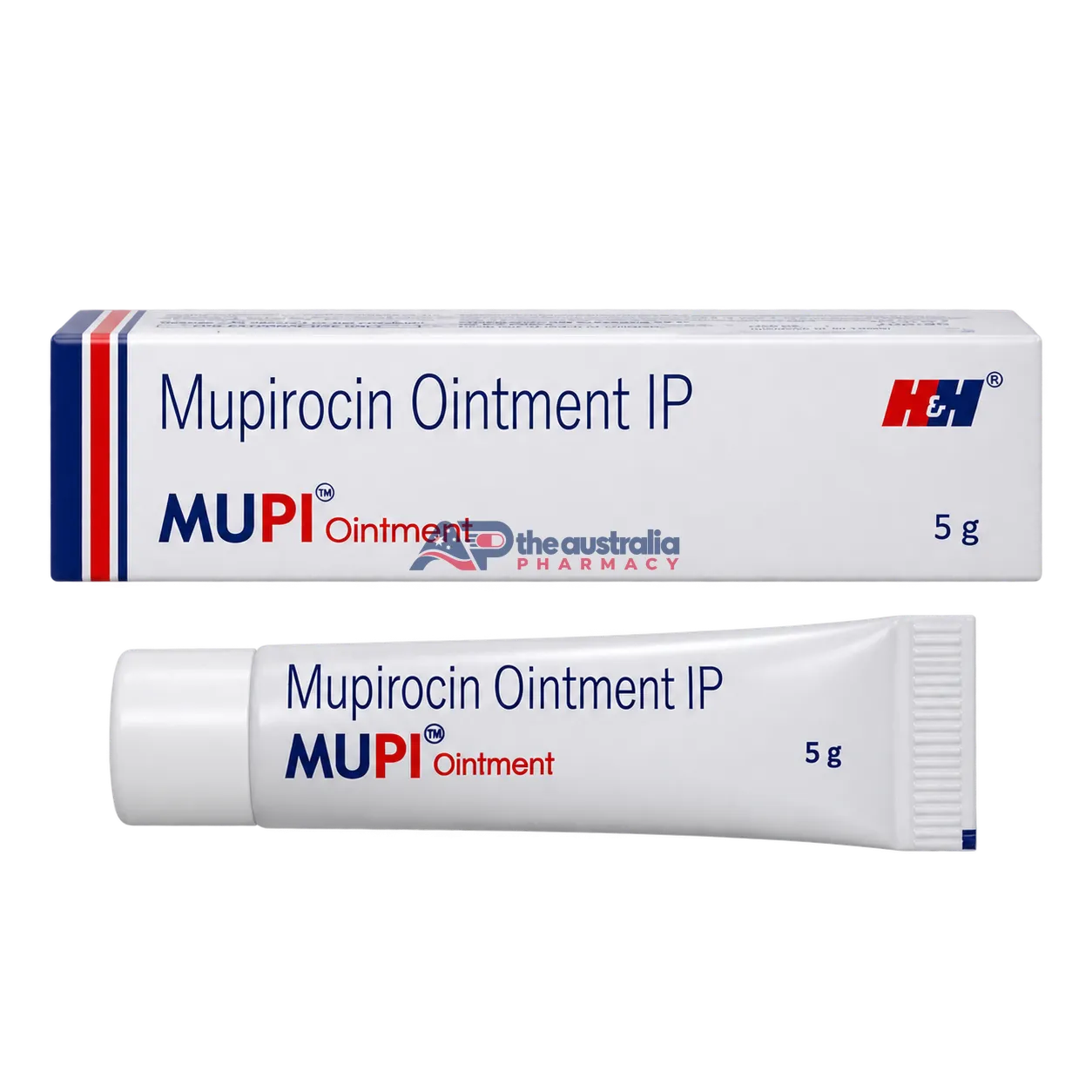
What Mupi Ointment is used for
Mupi Ointment contains mupirocin, an antibiotic applied to the skin. A prescriber may choose a mupirocin ointment for mild impetigo, also called school sores. Impetigo can start as small blisters that break and leave yellow or honey-coloured crusts. It spreads through direct contact with sores or items that have touched them, including towels and clothing.
Treatment depends on the number and location of the sores and how well the person feels. A small area of impetigo may be suitable for a topical treatment. Many sores, fever, or signs of a deeper infection need assessment to decide whether a different treatment is required. See the bacterial infections category for related medicine information.
Mupirocin skin ointments registered in Australia require a prescription. Information about the checks that apply when a prescription is required is available in the prescription and verification policy.
Product information
| Product | Mupi Ointment |
| Active ingredient | Mupirocin |
| Strength | 2% w/w, equivalent to 20 mg of mupirocin per gram of ointment |
| Dosage form | Topical ointment |
| Application site | External skin |
| Medicine class | Topical antibiotic |
| Main use | Selected bacterial skin infections, including mild impetigo |
| Australian prescription requirement | Registered mupirocin skin ointments are Schedule 4 prescription medicines |
| Application schedule | Follow the amount, frequency and duration on your dispensing label |
How mupirocin works
Mupirocin blocks an enzyme that bacteria need to make proteins. This slows the growth of susceptible bacteria where the medicine is applied. It can treat susceptible strains of Staphylococcus aureus and Streptococcus pyogenes. Both can cause impetigo.
The prescriber considers how the infection looks and whether topical treatment suits that part of the body. Apply the ointment to the identified area. A clinician can decide if a swab would help when sores keep coming back or treatment has been unsuccessful.
Application and treatment duration
Australian instructions for APO-Mupirocin describe applying a small amount three times a day, usually for no more than 10 days. Your prescribed course may be shorter. Use the amount and timing written on your dispensing label. See the Australian APO-Mupirocin product information.
The 2% strength describes the concentration of mupirocin in the ointment. Your prescriber determines how much skin to treat and how often to apply it. A thin layer is generally enough to cover the prescribed area.
- Wash your hands. Clean the affected skin as advised and pat it dry gently.
- Apply a small amount over the affected area. Use a clean swab or gauze if your pharmacist recommends it.
- Follow your clinician’s instructions about covering the sore and changing any dressing.
- Close the tube and wash your hands again. Keep the tube tip clean between applications.
Use the ointment for the prescribed course. Extending treatment can encourage the growth of organisms that the antibiotic does not control, including fungi.
Tip
Mark the final day of treatment on a calendar when you start. This helps you follow the prescribed course and know when to contact your doctor if the sores persist.
Skin and nasal formulations
Check the application site on the label. Mupirocin products can have the same stated concentration and be designed for different areas of the body.
| Mupi Ointment 2% | External skin | Topical treatment of a susceptible bacterial skin infection as prescribed |
| APO-Mupirocin 20 mg/g | External skin | Australian-registered example for mild impetigo |
| Prescribed mupirocin nasal ointment | Inside the nostrils | Used in selected patients to clear certain bacteria carried in the nose |
A pharmacist can check an Australian-registered skin ointment against your prescription if you need a different brand. Check the route, active ingredient, strength, and ingredients in the ointment base before changing products.
Possible side effects
Mupirocin can cause reactions where you apply the ointment. These can include:
- A burning or stinging feeling.
- Itching.
- Dryness or redness.
- Local discomfort.
Ask your doctor or pharmacist about symptoms that persist, worsen or interfere with treatment. Stop applying the ointment and seek prompt medical advice if you develop severe irritation, a spreading rash or hives. Seek medical advice if severe or bloody diarrhoea develops during or after treatment, especially with cramps or fever.
Warning
Call for difficulty breathing, swelling of the face, lips, tongue or throat, or collapse. These can be signs of a serious allergic reaction.
Precautions before applying the ointment
Allergy and application site
Tell your pharmacist if you have reacted to mupirocin or an ointment ingredient before. Check the ingredients on your tube or leaflet. Use an alternative chosen by your clinician if you have a known allergy to an ingredient.
Keep this skin ointment out of the eyes, nose and mouth. Rinse the eyes thoroughly with water if there is accidental contact. Tell the treating team if the affected skin is close to an intravenous line or cannula so they can choose suitable care for that area.
Kidney problems and damaged skin
Ask a pharmacist if your ointment contains polyethylene glycol, which may be called macrogol on the label. This ointment base can be absorbed through extensively damaged skin, and the kidneys remove it from the body. If you have moderate or severe kidney impairment, tell your doctor before using an ointment with this base.
Have burns, open wounds, and large areas of damaged skin assessed before applying mupirocin. The size and condition of the area matter when choosing a formulation.
Other products on the same area
Show your pharmacist any creams, ointments or antiseptics you use on the affected area. Mixing another product into mupirocin can dilute the ointment and affect how well it works. Ask for instructions on when and where to apply each prescribed treatment if you need more than one.
Pregnancy and breastfeeding
Tell your doctor if you are pregnant, planning a pregnancy or breastfeeding. The prescriber can consider the size and location of the area and decide whether this treatment is suitable. If treatment is prescribed for the breast, ask how to remove the ointment before feeding and prevent the baby from coming into contact with it.
When to have the infection reviewed
Contact your doctor if the sores show little improvement after three to five days of treatment. Seek advice sooner if the area becomes more painful, warm or swollen, redness spreads, or you develop a fever. A clinician can assess whether you need a different treatment or further testing.
Arrange a review if sores persist after the prescribed course. Tell your clinician how long you applied the ointment and whether you used other products on the same area. That information helps them decide what to check next.
Reducing the spread of impetigo
Handwashing after touching sores or applying the ointment helps limit the spread of bacteria. Keep towels, clothing and bedding used by the person with impetigo separate and wash them regularly. Encourage children to leave scabs and blisters alone. Cover exposed sores as advised, especially when returning to group activities. Read Healthdirect’s impetigo guidance.
Missed application, accidental swallowing and storage
Missed application
Accidental swallowing
Storage
Keep the tube closed in its original packaging and out of children’s reach. Follow the storage temperature and expiry date on your pack. If the tube has been left somewhere hot or the packaging has been damaged, ask your pharmacist to check it before use. See the medicine safety and storage guidance.
Return expired or unwanted ointment to a pharmacy for disposal. Follow the instructions supplied with your pack about discarding any ointment left after treatment.
Reviews
There are no reviews yet.